FW: Pimping Millennials & Screwing The Low Income


—–Original Message—–
From: whj@melanet.com
Sent: Tuesday, March 24, 2015 10:36am
To: “columbia_heights@yahoogroups.com” <columbia_heights@yahoogroups.com&gt;, “southcolumbiaheights@yahoogroups.com” <southcolumbiaheights@yahoogroups.com&gt;, “AdamsMorgan@yahoogroups.com” <adamsmorgan@yahoogroups.com&gt;
Cc: “‘abonds@dccouncil.us’” <abonds@dccouncil.us&gt;, “Alexander, Yvette (COUNCIL)” <yalexander@dccouncil.us&gt;, bnadeau@dccouncil.us, “Cheh, Mary (COUNCIL)” <mcheh@dccouncil.us&gt;, “‘kmcduffie@DCCOUNCIL.US’” <kmcduffie@dccouncil.us&gt;, “Evans, Jack (COUNCIL)” <jackevans@dccouncil.us&gt;, “‘dgrosso@dccouncil.us’” <dgrosso@dccouncil.us&gt;, “Mendelson, Phil (COUNCIL)” <pmendelson@dccouncil.us&gt;, “esilverman@dccouncil.us” <esilverman@dccouncil.us&gt;, “Allen, Charles (COUNCIL)” <callen@dccouncil.us&gt;, “‘Kenner, Brian (EOM)'” <brian.kenner@dc.gov&gt;
Subject: Pimping Millennials & Screwing The Low Income


From Lofts to Micro Units, watch the Public’s Balance Sheet. To paraphrase an old saying, “If you find yourself stuck in a hole and you want to get out, first stop digging.” If DC as a city really wants to address our affordability crisis, we, the Mayor, and Council have to first find the courage to stop digging the affordability crisis hole. In this case “stop digging” means ending DMPED’s practice of structuring land disposition deals which manipulate public subsidies, often low income, to build overpriced so-called luxury housing transferring public wealth to a hand full of families. These deals have become “Balance Sheet” Brothels in which low and moderate income families get screwed through discrimination and Millennials pimped for their on-demand incomes while wealth building capacity is being siphoned from both.

This DMPED structured “Balance Sheet Brothel” is best illustrated in the Hill East land disposition deal recently signed by the Mayor and previously unanimously approved by the City Council. If we look at the deal’s Term Sheet and extract the Balance Sheet data you will see that under DMPED’s deal the developer will invest $10 in equity and in 2 years at the end of construction will hold $21M in equity on their Balance Sheet. That is a 2.1M% return on investment in 2 years. Further, the deal is structured to provide the developer with an implicit government guarantee via low income housing bonds. Because of this, the developer assumes minimal risk and collects $8M in fees for their trouble. You don’t have to have a MBA in finance to know if a $10 investment can produce $8M in fees and $21M in equity in 2 years that all the Brothel’s in DC have NOT been closed down. And some pimping and screwing is going on.

The Mayor and Council can’t honestly approve this Hill East deal as structured and claim to be working to address housing affordability and developing a path to the middle class. This deal and other DMPED deals are structured to do the opposite. Just follow the balance sheet. A high priced so called luxury micro-unit rental or pimped out dorm room is design to transfer future wealth/equity into present day income for the luxury developer, whose development is being made possible/subsidized by public spending financed by long term public debt. When the average Millennial rents one of these units disposal income which could be used for equity producing investments or stimulus into the overall or neighborhood economy instead flows to the hands of a few. If a developer wants to do this take the risk and a Millennial want to rents these fine, but it should not be propped up by my Government using public land, low income housing subsidies and discriminatory housing policies. Government can no longer tell limited options to deal with the affordability crisis, while continuing to do deal like Hill East.

It’s time to stop digging and clean-up the DMPED Brothel. Then we can seriously address our affordability crisis and invest for the future. The con of touting education reform as an investment in our children’s future, while mortgaging that future to subsidize luxury units is ethically and morally wrong. And our government needs to get out of this business. I know the world’s oldest profession is not going anywhere, but it should not be the bases of community and economic development in this city. We need real and health economic growth. I know we have the Mayor and Council who can do this, let’s close the Brothel.
.


William


FW: DMPED & The Tapeworm vs. DC’s Middle Class


—–Original Message—–
From: whj@melanet.com
Sent: Wednesday, April 15, 2015 12:17pm
To: “columbia_heights@yahoogroups.com” <columbia_heights@yahoogroups.com&gt;, “southcolumbiaheights@yahoogroups.com” <southcolumbiaheights@yahoogroups.com&gt;, “AdamsMorgan@yahoogroups.com” <AdamsMorgan@yahoogroups.com&gt;
Subject: DMPED & The Tapeworm vs. DC’s Middle Class


I fully support the rhetoric coming from the Bowser administration, “Pathways to the Middle Class”. “We” must find ways to partner with the administration in achieving the goals of maintaining DC’s Middle Class and preserving pathways to it. Unfortunately, overall city policies and those of this administration are designed to squeeze the Middle Class out of existence and put in place an Apartheid like system made up of the so-called “Market Rate Class(es)” and the “Affordable Class(es)” preventing access to the Middle Class. This Apartheid like system, which I call “Genny Crow” after its great grandfather “Jim Crow” evolved out of the Williams Administration and developed through the Fenty and Gray Administrations; however, in spite its best of intentions the Bowser Administration is the first to formalize structurally “Genny Crow” with the creation of a Deputy Mayor for the “Affordable Class(es)”, Courtney Snowden and the Deputy Mayor for the “Market Rate Class(es)’, Brian Kenner. This split by the Bowser Administration is an honest admission that DC’s economic development policies over the last 11 years or so have lacked energy, depth and breadth needed grow, maintain and sustain “Pathways to the Middle Class” and that most of the economic growth experienced over the last 11 years of has been consumed or stolen by “The Tapeworm”. And now in the 50th year since Selma marches, we as a city are rationalizing and resigning ourselves to a reality that Apartheid is legitimate government policy as long it is not explicitly based on racial segregation. Instead of a policy rationalization and resignation, I urge instead a policy of destroying The Tapeworm ensuring “Pathways to the Middle Class”.


I’m often challenged to offer solutions instead of just critiques. Step One must be to starve and then kill the Tapeworm. The Tapeworm is maintained and sustained by DMPED’s Real Estate Development office and affiliated New Communities Office. The Real Estate Development office must immediately be defunded and assets, some personnel under its control transferred to the Deputy Mayor for the “Affordable Classes” along giving it management of DHCD. Walter Reed and St. Elizabeth probably should be spun off. The Real Estate Development office employs at least 8 people making over $120K per year plus benefits. Yet, it took that office 7 years to negotiate a development deal for Hill East. Then leveraging approximately $6M to $8M in public assets negotiated a deal which will create not a single Pathway to the Middle Class for a DC family, but will feed the Tapeworm $28M in equity. Similarly after working the Park Morton New Communities project for 9 years spending at minimum $20M produced at best 11 apartment units applicable to the Park Morton New Communities effort. Again not one Pathway to the Middle Class. This same office after restarting the Park Morton New Communities process about a year ago recently attended several community meetings(in the last 3 weeks), basically stated (while collecting salaries of over $120K each) that they, did not want to provide project timeline dates for Park Morton New Communities, because they did not want the community and residents of Park Morton to be able to hold them accountable. WTF?


Defunding DMPED’s office of Real Estate Development and transferring its assets will not immediately create, “Pathways to the Middle Class”, but it is a prerequisite. As it will immediately clear key obstacles in path to the Middle Class, wealth building opportunities and growth in disposable income for DC families. For example the Hill East deal will result in $28M in equity for the developer, but zero in homeownership equity for DC families. Home equity is one of the primary sources of wealth for entering and sustaining the middle class. The city would have been better off auctioning off the Hill East site and funding trusts for 100 DC General families of $140K each to help create “Pathways to the Middle Class”. Another path way to the middle class is increasing disposable incomes. DMPED’s Real Estate Development office structured the deal at Hill East to maximize rental rates, directly reducing disposable incomes. DMPED achieve the higher rents not only by building them into the deal structure, but by constricting the supply of housing. Delaying the current Hill East deal for 7 years and purposely sitting on many other Hill East parcels driving up rental prices by holding back supply. If the Mayor and Council are serious about affordability and “Pathways to the Middle Class” DMPED’s office of Real Estate Development will be dissolved in this budget cycle. The bottom line is that the Tapeworm consumes “Pathways to the Middle Class’, DMPED’s Real Estate Development office supports the Tapeworm, so the Real Estate Office consumes, not supports “Pathways to the Middle Class”; therefore, the office must be dissolved to create and maintain “Pathways to the Middle Class”. Instead of pathways for the Tapeworm to suck the life out of the Middle Class.
William

Georgia, One Avenue, Double Standard on Equity II


As I proffered in Part 1 (http://dcfeedback.com/whj/), our DC government promotes an unfair double standard in the design, implementation and benefits from city development policies. Specifically our public policy double standard is biased against low and moderate income Black Women and their families.


Particularly when it comes to who is positioned by our government to benefit from the acquisition, maintenance and accumulation of wealth (equity) through development incentives such as public land dispositions, loans through tax abatements, incentives, regulatory manipulation, enforcement even our city’s Comprehensive Plan.


Our government’s double standard and biases when it come to equity is best illustrated the saga of Park Morton public housing residents’ quest for equity under the city’s NCI development program and our government’s responses in the saga of the Adams Morton Hotel, The Line, over the last 10 years, Effectively our government used every excuse, regulatory, legal and political maneuver in its arsenal to frustrate the Park Morton Equity, while doing the inverse on behalf of Line Hotel developers and investors. In fact if strip it down, the Amendments to the Comp Plan proposed by OP before the Council will enshrine this double standard if passed as is.


Back in November when our government approved the Line Hotel tax abatement it completed the transfer $46M in public dollars, $25M in public equity to MGM Resorts International with a market cap of $14.6B, a hedge fund (Wexford) with $2.5B in assets under management and another fund (Friedman) built in part on opioid “pill mill” profits. The approval marked the end of a 10 year saga of our schizophrenic government unwinding probably the tightest written community benefits package with clawbacks in DC to my knowledge. All the while restructuring one of DC’s most unique and politically active neighborhoods, Adams Morgan, into a play pen for fund managers and billionaires.


To the east in another neighborhood, Park View/Pleasant Plains, our government was explaining to public housing residents that although the city was privatizing their public housing, they were not entitled to TOPA rights. And equity for them was not a consideration, that awarding them equity would harm the viability of their NCI development project. Which was kind of ironic, even hypocritical.


Ironic because, the residents of Park Morton are told they can’t acquire public equity because it would hurt project viability, but the developers of the Line Hotel and their investors were told that their project could not be viable in order to acquire public equity. Park Morton residents are told that their project can’t change to in order accommodate their demand of equity, while our city worked with the Line Developers to rework their project at least three times to ensure MGM and the edge funds got their equity. Two sagas which pretty much define the meaning of double standard and what our government has become.


The double standard and biased here is clear, no Trump and no Proud Boys, our DC Government after 7 years can’t find a path to equity and wealth building for the residents of Park Morton led by low and moderate income Black Women who live in our city, and can’t not find a path to enhance the wealth positions of the Line Hotel developers and investors primarily already wealthy White males through public equity some who don’t even live in our city. Under the current Comp Plan amendments, we want to bring this equity double standard to all 8 wards and neighborhoods in the city through a process call UpFluming.


I guess that’s racial equity in Black and White.


William


Georgia, One Avenue, Double Standard on Equity I

Our government promotes an unfair double standard in our development policies when it comes equity and the acquisition, maintenance and accumulation of wealth.  Specifically, a biased double standard rooted in a particular combination of race, class and gender.


This double standard when it comes to equity and wealth building is clearly illustrated in our governments roles and development politics in the Lower Georgia Avenue Corridor (LGAC) when we  compare analyze the political response to Park Morton residents quest for equity to quests of entities such as Park View Community Partners(PVCP), Zuckerman-Garvey (ZG) and even Howard University.


In order to better understand the LGAC equity double standard, which also permeates economic development policies across the city, one much have a general understanding of the role(s) played by our DC government. Over the last 20 years or so, economic development policy has largely been driven by and depended on the transfer or conversion of public resources and  “public equity”  into “private equity”  to supposedly achieve city economic and civic goals and objectives.   Over the years this transfer and conversion process has evolved from a more planning, civic and regulatory based  process to one today that is primarily political. A very good example of this primarily political process with have today is Adams Morgan Hotel, The Line, tax abatement. 


Typically DC government regulatory and political processes for transferring public wealth to privative wealth are discretionary and include land dispositions, tax, zoning and regulatory exceptions, cash transfers and credit instruments, some direct some indirect.   These political transfers of wealth or equity from public to private hands are often not done transparently, nor based on merit, performance or even need, but often arbitrary and capricious politics based on a double standard(s).


Unfortunately, the LGAC has evolved to become a text book example of the above counter productive double standard. 


The residents of Park Morton under the leadership of its resident council, The Council @ Park Morton, entering their 3rd round of NCI development after two failures has requested an equity position in the project moving forward.   The Council @ Park Morton and a larger portions of its households are lead by low and moderate income Black women.   Their request is allowable both under HUD Section 18 regulations and local TOPA regulations.  Their request(s) have been obstructed, undermined and deflected by local political leadership since 2018.  Since the restart of Park Morton NCI, without building a single new unit of housing the equity position of the project has increased by $42.5M, done of which will be shared by residents.


Maryland based developer Zuckerman-Garvey(ZG) entered the LGAC market in a big way around 2013/14 when the Park Morton NCI process was restarting for the second time. ZG ultimately proposed to build over 300 new units of housing plus retail over 3 mixed use developments.  In contrast to the Park Morton request, political leaders have bent over backwards to help ZG enhance their equity position in LGAC with the granting of multiple PUD zoning extensions, land transfers and etc..   My rough estimate is that without build a single unit of housing ZG’s equity position with the help of local politicians has increased by $96M.  ZG is led by White males.


Six years ago, PVCP lead by The Community Builders (TCB) out of Boston was awarded development rights for the Park Morton NCI project with an 80% equity stake.  TCB is a non-profit with a diverse board.  Since the award of development rights in 2014 TCB with the full support of local politicians were awarded two ground leases covering close to 4 acres for $99, $5M loan/grant for predevelopment costs, two contract extensions, regulatory relief, but has produced Zero (0) housing units in those 6 years and lost a major zoning case.  However, they will benefit from the $42.5M in equity accrued to date, while the residents of Park Morton are displaced during this pandemic.


So combined PVCP and ZG without building a single unit of housing have gained approximately $137M in their equity position made possible in large part by support from our political leaders.   On the other hand, Park Morton residents have been obstructed in their efforts to share in this unearned equity gain, but instead have suffered anxiety, displacement and neglect as a result of political choices by our government and elected officials.  In fact, residents quest for equity have been reject in part because doing so may hurt PVCP and ZG equity position gains.


It should be noted that the Comp Plan Bill B23-0736 which is enthusiastically supported by our LGAC political officials with serve to cement the PVCP/ZG $137M equity to Park Morton $0 disparity and double standard.   


The great thing about the LGAC, Ward 1 and citywide is that their are people will to work, organize, campaign to deconstruct and challenge the “Georgia, One Avenue, Double Standard on Equity” by supporting the Park Morton Equity Plan.   People and neighbors who are coming to understand that approving Comp Plan changes which upFLUM zoning maps without addressing our double standard on equity is a recipe for displacement, while perpetuating historic biases and inequities especially for low and moderate income Black women and their families. 


Hopefully with a new City Council and ANC we will find the courage to crush this double standard in 2021.


William


UnMasking DC’s Affordable Housing Policy I


A major element of today’s DC Affordable Housing policies and implementations are based on a flawed and even corrupt model incubated years ago in Ward 1.   This model is the basis of most development deals past and present emanating out of DMPED, Inclusionary Zoning (IZ) and the current Comp Plan Bill B23-0736. 


In approximately 2001, DC adopted an affordable housing development model based on the write-down of the value of public land contributed to private development deals.  The model proffered that the value of the contributed public land would pay for the production of affordable housing; therefore, the city would not have to investment public dollars in the creation of affordable housing.  Instead the market would pay for the development of affordable housing.


The first test of this model was the awarding of two publicly owned  14th Street Columbia Heights urban renewal parcels to developer Donatelli & Kline, today Donatelli Development.  The parcels today host the Kenyon Square and Highland Park I and II developments.  Donatelli’s proposal was accepted by the city based on this write-down premised in his proposal including the fact that “NO” additional city money or resources would be required to achieve affordable housing and other public/community benefit goals with these projects.  In fact Donatelli & Klein went further saying they still pay for the public land. 


At the time of the Donatelli & Klein award other developers and professionals warned that Donatelli’s proposal was not viable, but the award was made.   And the city passed legislation making Donatelli’s proffer city law, public land value write-down would pay for 20% affordable housing with no additional public investment.    The only exception from Donatelli’s proposal was the use of federal low income housing tax credits, LIHTCs.


By 2004, Donatelli was already hedging on their proposal and by 2009 would request a bailout of a property tax abatement valued at $8.5M.   They would also stall for time, ask for additional zoning relief, cheat the affordable housing requirements (per DC Auditor), reduce ADU unit size, steal public land and homelessness resources.   The Donatelli model collapsed in failure. Yet today, this model remains the hart and soul of DC housing policy including the New Communities Initiative (NCI), and OP’s Comp Plan amendments currently before the City Council.


Behind the mask of growth and density which is the current front for DC Affordable Housing policy is a reality that underlying policy never worked from the beginning.  Starting in Ward 1 Columbia Heights in 2001 thru today in Ward 1’s Park Morton New Communities Initiative project today on Georgia Avenue.   In 2021 its time to strip away DC’s affordable housing mask and reveal a displacement model of greed and discrimination under cover of smart growth.


William

http://dcfeedback.com/whj/


Pandemic Patios & Impacts of COVID-19 – Vertical Redlining


The attached articles from the Canadian Planning Magazine “Plan Canada” does in excellent job in explaining additional dynamics of “Vertical Redlining” which unfortunately are at the basis of OP’s Bill B23-0736 Comprehensive Amendment Act of 2020.   Vertical Redlining leverages various land use and other policies to institutionalize historic racial inequities around wealth and income associated with redlining policies of the 1940s, 50s, 60s and 70s. 


Historic redlining used primarily horizontal techniques associated with housing segregation to obstruct Blacks and others access to wealth building tools, where as Vertical Redlining leverage land use policies which favor urban density to achieve the same inequities.   Another aspect of Vertical Redlining is found in transportation and public space policies often referred to as Mobility and Micro Mobility.  The “Plan Canada” articles delve into how the COVID-19 pandemic is being used in a way which  advances radical inequities.


Director Marootian’s DDOT under the guise of “Demonstrations Projects” along with DMPED’s COVID-19 Recovery Efforts on the ground implementing theses vertical redlining land use politics discussed in the articles, while OP seeks to make them permanent via Bill B23-0736.  The article refers to theses policies and actions as  “flat white urbanism”.


Although the articles focus primarily on Canadian city’s and their policies mirror the Vertical Redlining we are experiencing here in DC via public policy.   And our challenging mix of big capital, professional planning and race.


William


DC’s Comp Plan & Vertical Redlining II


Bill B23-0736 Comprehensive Amendment Act of 2020 crafted by DC’s Office of Planning (OP) under Director Trueblood structurally amounts to “racial redlining” often associated with 1930s -1970s.   The active ingredient of OP’s structural redlining instead of relying on horizontal placement of lines on a map, instead relies on less visible vertical impacts, “vertical redlining”.    To better understanding “vertical redlining” inherent in B23-736, would require the production of 3D and 4D maps something OP such provide.


There is a certain irony in the public debate around B23-736 in that the bill’s strongest supporters, “pass it now!”, speak mostly about the ills of historic racial redlining while supporting a bill which reestablishes redlining via the Comp Plan.   Some of this is rooted in ignorance, some lazy politics and some just plain greed.    For clarity, the primary purpose of racial redlining and its antecedents was to structurally separate Blacks and some others from wealth and the tools of wealth building, not so much to Segregate Blacks from Whites.   The dynamics around Black home ownership, mortgage lending and government regulations are most often cited in the story of racial redlining.


By 2004, city leaders figured out how to use zoning PUDs, city tax and disposition  subsidies via public-private partnerships and public corporations to implement a ad hoc system of modern day redlining, all wrapped in Mayor William’s 100K New resident policy.   Neighborhood residents and developers were incentivized and pushed by the city leaders to support larger and more dense projects.   Such projects were not financeable in most neighborhoods so developers required/demanded more and more public subsidy.   In response the city shifted subsidy from projects which would support low and moderate income residents progress, primarily Black and Latino, to facilitate  targeted new residents primarily White.  And when it came to housing, incentivizing a product beyond the price point of many Black resident to obtain a mortgage or related business loans.  This was cemented after the 2008 crash.


The taller and denser, the vertical nature of the project, the less likely that it would be accessible to DC’s Black residents, particularly in neighborhoods a few years earlier would have been accessible.  B23-0736 seeks to make this ad hoc redlining progress structural. 


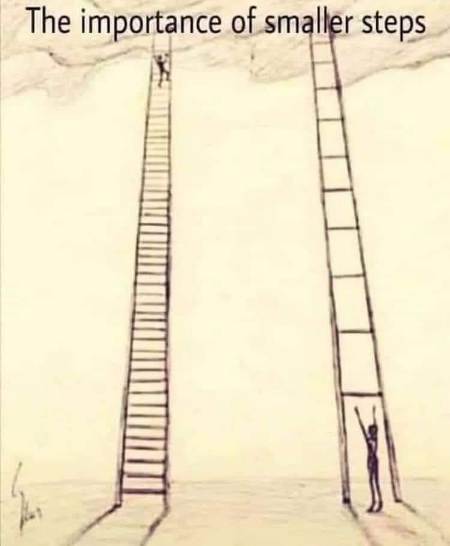
The image below provides a good illustration of this vertical racial redlining.   While the ladders seem to be design to reach the same location, the distance between the rungs is increased on the ladder to the right.  B23-736 changing of Comp Plan maps, up-FLUMing and definitions increase distance between the rungs when comparing the ladders.


In DC, the wealth and income status of Black residents is inversely proportional to neighborhood project density beyond the levels facilitated and envisioned by the  2006 Comp Plan.  B23-0736 directs the flow of public and private capital and resources into vertical strata typically beyond the reach of DC Black residents, thus “Vertical Redlining”. For examples of this vertical redlining” look no further than the Park Morton NCI, Howard Hospital, McMillan, and Union Market projects. 


The proponents of Bill B23-0736 Comprehensive Amendment Act of 2020, OP and other so-called Smart Growthers proffer that the overall increase in the production of affordable housing units over the next 25 years is adequate compensation for the racial impacts of “vertical redlining”.


We will explore this proffer in DC’s Comp Plan & Vertical Redlining III, racial equity and affordable housing for DC’s Black Families.


William


FW: “No” on Bill 23-884, “Yes” Park Morton Equity II


Subject: “No” on Bill 23-884, “Yes” Park Morton Equity II


For clarity, the ask of the City Council by The Council @ Park Morton and the Park Morton Equity Team is that Bill 23-884 only be passed as a 120 day temporary bill.   The purpose being avoid starting the entire project over from scratch, while providing time for a negotiated restructure of Park Morton NCI to include the Park Morton Equity Plan and related resident protections and benefits.


This request is not unprecedented, occurs often in these city sponsored public private development deals.  In this is occurred in 2016 when the Strand Theater deal was restructured to include a new equity partner, 86 units of housing including 28 replacement units for the Lincoln Heights NCI project.  


For Lincoln Heights NCI DMPED brought in a local for profit developer, in the case of B23-884 and Park Morton the ask is to include the residents of Park Morton as equity partners via a resident controlled entity.   The Lincoln Heights developer brought no additional cash or property to the table, but experience and community insight and connections.   Using the same tactic here on behalf of Park Morton residents would not have an significant negative impact in terms on timeline, legalities nor finances, instead would improve/save the Park Morton NCI project in these areas. 


The refusal to consider a temporary approach to B23-884 is primarily a political one, based on prejudices concerning who of deserves “equity”.   Or in this case who does not deserve equity.   It excuses I’ve heard for denying the residents this opportunity to negotiate for “equity” in this project have been shameful, enraging, down right discriminatory and incongruent with facts and evidence. 


In September 2016, the Council approved of a 3-month disposition extension (D.C. Act 21-497), to allow time for a public hearing before considering a lengthier extension. This hearing was scheduled to give the Council an opportunity to discuss and overview the latest iteration of the project. Since the initial Strand Theater Redevelopment Plan approval in 2008, the Developer has formed a new partnership with the Warrenton Group and The NHP Foundation, and has created a new development program for the Property that would both address neighborhood needs of quality retail and community space, while also incorporating affordable housing, which was not a component of the original redevelopment plan for the Property.
Chairman Phil Mendelson, Committee of the Whole, December 2016, Report on Bill 21-658, “Extension of Time to Dispose of the Strand Theater Act of 2016” 


Without equity, Park Morton residents have NO legal entitlement to their homes under NCI.  Further without a Build-First site the odds of return for residents is about 15% in line with the Hope VI model that NCI was designed to improve upon.   What is really painful is to see the Council continue to give the benefit of the doubt to DMPED, DCHA and the development teams, but not residents.   Although NCI, DCHA, DMPED and developers retread the same people. 


For example here’s a list of NCI Directors who have worked for DMPED during the time of Park Morton NCI, 2007 onward.


  • Buwa Binitie, Jan 2007 – May 2009 (Currently Dantes Partners developer Park Morton NCI)
  • Senthil Sankaran, Feb 2008 – May 2010 (Currently Director Development DCHA, Sep 2019 – Present)
  • Kimberly Black King, 2013 – 2015 (DCHA Chief Development Officer 2015 – 2018, Currently VP VOA)
  • Angie Rodgers, May 2015 – Jun 2019 (DCHA Vice Chair 2010-2012, Currently Deputy Chief ED PG County)
  • Denise Robinson, Feb 2019 – Sep 2020 (DCHA 2009-2014, POAH 2014-2019 Developer Barry Farm, Current ED PG County)

All have worked in at least two positions related to NCI either DCHA, DMPED or an NCI private developer.   I’ve met many of them, great and smart people no doubt deserve there career successes, but they have not produced for Park Morton residents.   Ironically, it seems The Avenue which delivered some for Park Morton residents may have occurred primarily during the time was their was no sitting NCI Director for DMPED.


So far Park Morton NCI has delivered jobs, opportunity and politically hay for everyone expect the residents.   In fact read the linked-in profiles, agency postings and political fact sheets you would think residents were living in new units with new jobs. Instead of dealing with displacement and all the other B.S.


It’s time for resident equity!


William


“No” on Bill 23-884, “Yes” Park Morton Equity


Subject: “No” on Bill 23-884, “Yes” Park Morton Equity


Tomorrow with the full support of Ward 1 CM Nadeau, the Council will pass Bill 23-884, Bruce Monroe Extension of Disposition Authority Act of 2020 giving the developer an additional 3 years to perpetuate failure while pretending that the Park Morton New Community Initiative (NCI) development project is still viable.  With passage, the Council will take full co-ownership of NCI failures.


It will also marks another council period in which no new housing units or jobs production have benefit residents.  Instead more than half the residents of Park Morton which began the council period have been intimidated and displaced from their Park Morton homes.  Over 70 of the 133 families have been displaced contrary to NCI principles.   


Again, in spite of growing evidence that after 6 years the current Park Morton NCI as structured is a complete failure for residents and no longer viable, CM Nadeau remains under the delusional belief that some how DMPED and DCHA will get their act together on behalf of residents.    Well, last week’s DCHA board hearings on the New Market Tax Credits (NMTC) debacle should be enough evidence even for CM Nadeau.


In short, DCHA through its subsidiary DC Housing Enterprises (DCHE) was forced in desperation to drop investing $6M in 28 Lincoln Heights NCI public housing replacement units because DMPED failed to provide $3M in gap funding; although they, DMPED’s NCI Team, had 1 year to come up with the funding.  Instead DCHA was forced to pass a Resolution 20-21 authorizing that $6M to be invested in a South Central Los Angeles Hospital project to avoid loosing the $6M and jeopardizing tens of millions more in future NMTC investments for city projects.


If the Council approves B23-884 tomorrow in deference to CM Nadeau, they are effectively endorsing the “Keystone Cops” of housing and economic development that NCI as become as evidenced in the DCHA hearings, see links below.  The finger pointing and denial exhibited by officials and experts was embarrassing. 


DCHA 12/09/2020 Board of Commissioners Meeting [Start 42:00]

https://www.facebook.com/dchousing/videos/700660627515320 


12/11/2020 DCHA BOC Emergency Meeting Part 2

https://www.facebook.com/dchousing/videos/314324509700433


The reality is that if the DMPED/DCHA NCI partnership could not after a year get the 28 Lincoln Heights replacement units as part of the Strand Theater Project to closing after a year with all the advantages of time, public land, funding and no legal impediments, there is no rational reason to continue give Park Morton NCI developers carte blanche  facing much greater impediments and pressures. 


The Council @ Park Morton (resident council) and its Equity Team has asked the Council to waive deference and not pass B23-884, but instead only a temporary bill, 120 days, to allow time for Park Morton NCI to be restructured to ensure residents are for once “put first” and the project meets standards of development and racial equity.   


Especially now with the insight in to the current state of NCI loosing $6M in NMTC has provided, the Council is obligated to act in the interest of Park Morton residents, equitable development and racial equity.    Understanding, that approving B23-488 as is means that they are ignoring the evidence and taking full ownership of NCI’s Keystone ways. 


As well, The Council @ Park Morton and the Equity Team urges the community to reach to council reach out to Council recognize the evidence and save NCI from its Keystone self.  And adopt the Park Morton Equity Plan. 


William


————————


Park Morton NCI is depended on the same source (DMPED) of gap funding as The Strand.  The deals of structured similarly, except The Strand is better positioned. 


The Strand


Received a commitment of $14.4M in  construction financing from Citibank’s Citi Community Capital fund. 


In September 14th 2020 received a second 2 year PUD extension because DMPED and the development team could not put the financing together a financing capital stack for the Strand which most NCI projects depend.


 – Low Income Housing Tax Credits (LIHTC) 

 – DMPED Gap Financing (DMPED already put in $15.6M loan with a $5.7M increase in 2018.

 – NMTC financing which they just lost.

 – Historic Tax Credits, which they lost (~3.0M)

 – Opportunity Zone Tax Credits (a hope for)

 – A DC Grocery Tax Credit 

 – 15 Year Local Rent Supplements Contract (LRSP, $6.85M)  

 – DC Housing Finance Agency (DCFHA) $26.6M bonds, 2019.


The Strand has also received more LDA extensions that I can count, at least since 2009.


This kind of complex capital stack for the Strand is driven by the desire for these large, dense housing projects, but almost ways come at the expense of current residents and communities.  With all of these moving parts no wonder projects can’t get done, while incentivizing developers to wait for the next public handout or tax credit. 


Bill 23-844 is basically incentivizing Park Morton Developers to follow the path of the Strand developers.


———————————————————————————————————–

Testimony of William H Jordan, Member Park Morton Equity Team  on
RESOLUTION 20-21 TO AUTHORIZE DC HOUSING ENTERPRISES TO MAKE FINAL DEPLOYMENT OF REMAINING $6,000,000 IN NEW MARKETS TAX CREDIT AUTHORITY TO THE RENAISSANCE NEW MARKETS FUND LLC


Chairman Albert and Board,


I urge the board to seize the opportunity of the current New Market Tax Credit (NMTC) debacle to make the necessary structural and operational changes to the New Communities Initiative (NCI) and DCHA’s ongoing role.   The current $6M allocation emergency and the jeopardy to DCHE’s $122M NMTC program is a direct result of structural inequities for DCHA residents inherent in the city’s NCI program and operational deficiencies in the execution of NCI’s Build-First and replacement unit principles.


The Board would be foregoing its fiducial and moral responsibility by passing Resolution 20-21 without simultaneously changing DCHA’s structural relationship to NCI.  Moving forward as being proposed is akin to shaving 6 feet from the tip of the iceberg after the Titanic struct it to save the passengers’ grandchildren.


The primary PROBLEM here is DMPED’s mission creep and rudderless management of NCI “Build-First”, replacement unit obligations and related financing gaps.  This pattern was evident here at Lincoln Heights NCI, but also Barry Farm and Park Morton. The immediate SOLOUTION is to transfer the responsibility for NCI to DCHE, beginning with Park Morton NCI and related Park Morton Equity Plan (PMEP).   In fact, DMPED no longer has an executive/senior level Director of NCI.

I urge the board today to avoid Titanic results adopt the following modifications to Resolution 20-21:


The 6th WHEREAS –  after ‘(the “Strand Project”)’ add “for the purposes of financing and building 28 Lincoln Heights Build-First units;”


The 8th WHERAS – after “NHP Foundation” incert “and its public partner DMPED”


Add after the final and addition BE IT RESOLVED saying – “BE IT RESOLVED, DCHA Board urges DMPED to begin the transfer the responsibility for the NCI program to DCHE.  And beginning this transfer process with Park Morton NCI project with the purpose of moving the project forward including the implementation of the PMEP.”


See Attached Backup Materials:


– Excerpt Committee Report Bill 21-658, “Extension to Time to Dispose of the Strand Theater Act of 2016” (12/6/16


– Contract CA22-0551 – $15,600,000 DMPED Loan to developer (6/20/18)


– Z.C. Case No. 17-19 The Warrenton Group and NHP Foundation (6/11/18)


– PR23-0322 – 15 Year LRSP Contract valued at $456,456 per year to developer (5/20/19)

– DCHA Resolution 19-17 LRSP (5/8/19)


– Z.C. Case No. 17-19A The Warrenton Group – 2yr Zoning Extension (9/14/20)


————————————————————————————————


 “…might as well pay attention, You can’t afford free speech”
1977 Funkentelechy Vs. the Placebo Syndrome
 

DC’s Comp Plan & Vertical Redlining


Bill B23-0736 Comprehensive Amendment Act of 2020 crafted by DC’s Office of Planning (OP) is in effect a “vertical redlining” bill which maybe more damaging to DC families in particular Black Families than the racial redlining which evolved hand in hand with urban renewal policies evolving out of the 1930s – 1980s.   As such, B23-736 should be killed in its tracks, because any potential good in the bill will be out weighted by the harm.  


“Redlining is the systematic denial of various services by federal government agencies, local governments, or the private sector either directly or through the selective raising of prices. This often manifested by placing strict criteria on certain goods that often disadvantaged poor and minority communities.[2][3] Prior to the Fair Housing Act of 1968, there were no specific laws that protected minority populations from discriminatory practices such as redlining. Businesses were therefore able to exploit these groups in order to increase their profits.[4] Redlining was utilized in the housing industry by mortgage companies to suppress minority populations from receiving home loans. This directly contributed to the spatial isolation of minority communities as they were denied a loan to move out of the neighborhood, while also being denied the funds to improve their current homes.”

Redlining – Wikipedia


In the U.S. and particularly in DC, government policies and financial markets and tools are tightly bound.  Access financial tools and capital,  the nature of these tools and capital determine who can build and maintain wealth.   Wealth in turn is directly and correlated to nearly all outcomes in US society from health to education to safety.  On maps horizontally the US and DC tended to be segregated by race and other factors.  Directly and indirectly access to financial tools and capital are needed to build wealth.  Traditionally, access to good land and later land connected to housing, housing ownership and cheap secure capital determines who builds wealth.   Black families tend to be denied such access.


Bill B23-0736 is designed in a way which will reinstate the equivalent impacts redlining on Black Families similar to those in the 1930s – 70s.  This will primarily be accomplished via land use policies which increase neighborhood densities (up-FlUMing) and promote the production of rental housing particularly in Black neighborhoods (formerly as well).  The greater the density the harder for Black Families to access in a manner which builds wealth for them.


Traditionally working and middle class levels of wealth are built and maintained via home ownership, this can’t happen for DC’s Black families in DC if little or no single family for sale housing is being built.  And if the city’s financial incentives encourage the single family stock which is available to be converted to higher density rental and used for commercial purposes.


Up-FLUMing and land use shifts raises the commercial value land and therefore housing in a way which is disconnect from current market conditions, but future markets.  And because these future markets of more commercial in nature than residential, these future markets are more speculative even further driving up the cost of land and housing today.  So up-FLUMing as the impact of reducing the amount of housing available today.


Because the Black-White income and wealth gap is so large in DC and future markets are optimized White via gentrification policies, Blacks by in large can’t access the financial tools to in a manner which will allow them to own single family housing.  Therefore, they can’t built wealth and therefore improved health, education and safety outcomes.  So under current pay-to-play policies and future up-FLUMing even housing in Black neighborhoods are not available to Black Families, “vertical redlining”.


Attempting to fix Horizontal Redlining harms of yester year by Vertical Redlining public-private policies in the future is a pure “con”.    The only way this approach works is if we are willing to structure a city purposely through public policy where Black Families are relegated permanently to a second class status.  Which will be the primarily impact of Bill B23-0736 Comprehensive Amendment Act of 2020.   The bill will only exacerbate the harm done by pay-to-play policies most associated with CM Jack Evan’s reign over the city Committee on Finance and Revenue over the last 20 years.  Yes these polices periodically filled our city’s coffers, but so did King Cotton fill the nation’s coffers and wealth during between the 1830s and 1860s. 


Kill the Bill and Start from scratch. 


William